
Blog · Business
Top 9 Types of Problem Clients and What to Do with Them

This article comes from the blog archive – figures and examples reflect the year it was published.
Let’s get one thing straight from the start – we value all our clients, we love them all, and we try to deliver the very best service to every one of them. Yet even with that mindset, it’s not at all unusual to catch ourselves, every now and then, thinking that we’d dearly love to give some of them a good slap round the chops with a wet rag.
There’s nothing wrong with that, and nothing disrespectful about it. We’re all only human. The image may amuse you, but if you work in services, we can probably agree that it isn’t a solution. Over the course of my career I’ve met all sorts of people and come to understand that, just as I won’t be a good partner for every client, some clients simply aren’t for me.
There are, however, types of people who may get on our nerves now and then, but with whom working together is possible, as long as we learn how to handle them. All it takes is a little patience, diplomacy and the ability to get your priorities straight. If a given collaboration brings you more benefit than suffering, it would be foolish to throw it away just because of your own ego.
Type 1: I Don’t Know What I Want
At first glance this type of client comes across as indecisive, isn’t quite clear about what they expect and, on principle, changes their mind every time a solution is getting close. It can be very tiring and time-consuming.
A word of advice: Verify every brief and accept briefs only in writing. Nothing you agree with this person face to face is guaranteed to still hold a few minutes later. Agree that briefs are accepted in written form only, never any other way.
Type 2: I Don’t Care, Just Do Something
This is a slightly different version of client no. 1. This one may not be indecisive, but doesn’t know how to write a brief. Often these are people who don’t have enough time, or who don’t attach enough importance to the area in question to give it their attention – they just know that something has to be done. Or... in the better case, they trust you completely.
A word of advice: Look on this client as a rare gift who grants you freedom in your creative intent. Even so, communicate and confirm the key areas with them, so that they don’t turn into client no. 4 in the blink of an eye.
Type 3: Why Should I Pay More? I Thought That Was Included in the Price...
The collaboration is ticking along, everything’s great, new briefs keep coming in, but oops... Some of them now go beyond the scope of what was agreed. Although the client approved the quote at the outset and was also given the price list for work beyond that scope, when the final invoice arrives they suddenly look surprised and are reluctant to pay for anything outside the original quote.

A word of advice: Tell them as you go, the moment such a task is assigned, that completing it will affect the price. That way you’ll avoid surprises on both sides.
Type 4: What You’ve Done Is Great, but We Wanted Something Completely Different...
You hand over the finished job and get a bucket of cold water. All that work flushed down the drain, because the client either changed their mind, or didn’t communicate the brief properly, or behaved as in type 1 or 2. What now?!
A word of advice: When the project is commissioned, agree on terms such as a “sketch fee”, or the additional costs associated with reworking the project.
Type 5: That’ll Take You About 5 Minutes...
This client knows exactly how long every task will take you and is convinced that everything they give you is a simple matter you’ll finish and send back by return. And that’s regardless of whether you have another 100 deadlines from other clients.
A word of advice: Track your time on individual tasks and, when the task is assigned, tell the client a realistic delivery time. Repeat like a mantra that not everything can be done well, fast and cheap – only a combination of two of these parameters is on offer. Leave it up to them whether they’ll take their five-minute job with an express surcharge, or bring their expectations back down to earth.
Type 6: I Don’t Like This, but I Don’t Know Why...
Vague feedback is a very common problem. The client often doesn’t know what bothers them about the work delivered. They can’t name the problem, but deep down they just “feel” that, simply put, this isn’t it.
A word of advice: Don’t try to find out what the client likes. Especially when it comes to design or graphics. In this case every execution is a matter of taste. Try instead to uncover in the brief what they want to achieve with the project. Meeting the goals that were set should be the yardstick here. For your defence, have all the arguments ready as to why things are done this way and not that – surveys, behavioural psychology, emotions in marketing. All of these should be your trump cards. If you’re unable to find a compromise with the client between your vision and theirs, then sadly this is not the client for you.
Type 7: But I Want It Exactly Like This...
This client is the exact opposite of numbers 1 and 2. They have a precise idea and cling to it like a limpet. Sometimes they can even describe it, but you know full well that it’s wrong. It will mean money down the drain and, in the long run, won’t bring them the effect they want.
A word of advice: Here you mainly have to wrestle with your own morals. Fight the client and educate them? Or shrug it off? If you’re dealing with a truly stubborn number seven and, at the same time, you’re after short-term profit, then the only way is probably to close your eyes and give him/her what he/she wants. In that case, though, you have to reckon that at some point your paths will part anyway, because sooner or later the client will find out that their solution doesn’t work. If you want to work with the client for the long term, then you have to take the risk and try to persuade them / or at least warn them of the risks associated with their idea of how the project should be solved.
Type 8: We Need to Talk It Over
This is the favourite mantra of big clients. Corporations simply run on meeting mode. If you work in a corporation and don’t have at least 4–5 meetings a day, then sorry – but you simply aren’t one of the important ones. If you have a meeting at a corporate client’s, a good rule of thumb is that at least 3 people are present. The number of people on the client’s side rises with the size of the budget allocated or the importance of the task. In such a regime, however, it’s sometimes complicated to reach a decision, because regardless of what is said at the meeting, the client still has to go away and talk it over anyway.
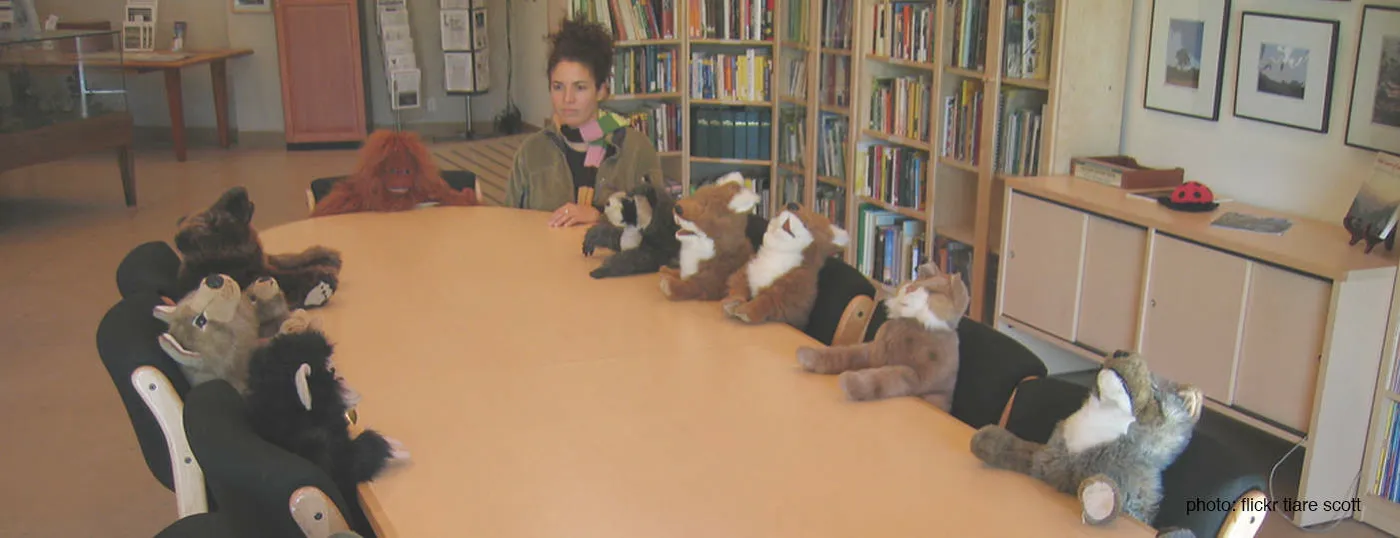
A word of advice: Insist on a liaison officer being appointed, who will communicate with you and whom you can bombard with questions or deadline reminders. You needn’t have the slightest pang of conscience about this. Corporations run on meetings and deadlines. Whoever is put in charge of you will be used to it.
Type 9: Everything Is a Priority
This client sees every task as equally important and expects each one to be done without delay. They churn out one task after another and aren’t the least bit interested in how things hang together within the project plan. They simply feel that if whatever has just occurred to them isn’t done immediately, the world will collapse.
A word of advice: The only thing that helps here is the patience of a saint and the ability to explain, communicate and educate over and over again. With every task, verify its goal and then let them know when it can be completed and how it will affect the overall project and the delivery of the strategic plans. A bogeyman in the form of increased costs, or the need to push back final delivery of the plan in view of the new tasks and priorities, works rather well too.
Good luck and chin up...